
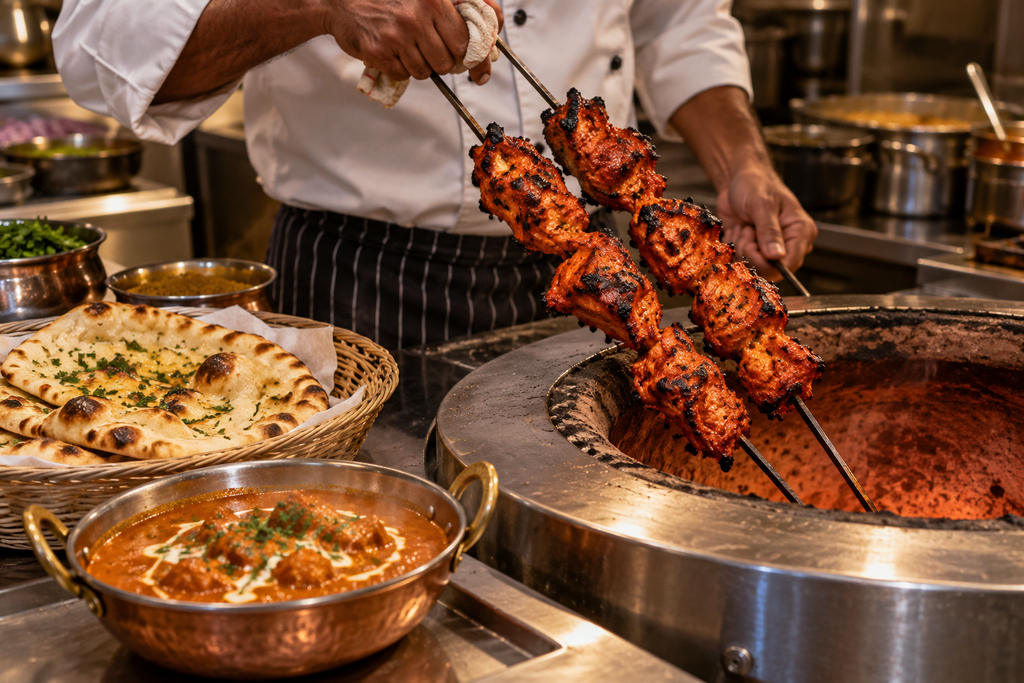
The way food is cooked can influence its flavor as much as the ingredients themselves. Intense oven heat, gentle simmering, and careful roasting each create different textures and aromas. Exploring Indian cooking techniques helps diners understand why a tandoori dish, a rich curry, and freshly prepared bread offer such different experiences within the same meal.
Tandoori Cooking Uses Intense Heat
A tandoor is traditionally a cylindrical clay oven that holds intense heat. Cooks place skewered ingredients inside, where the surrounding heat develops a browned exterior. Marinades contribute seasoning before the food reaches the oven.
A familiar example is tandoori chicken, which combines marination with high-temperature cooking. The resulting flavor depends on the ingredients, fuel, and preparation; tandoori does not automatically mean intensely spicy. Among Indian cooking techniques, this method offers a noticeable contrast to dishes prepared in liquid.
Simmering Brings Ingredients Together
Simmering cooks ingredients gently in liquid, allowing seasonings, vegetables, pulses, or meat to contribute to the surrounding sauce. The surface should show gentle movement rather than a vigorous boil. Time and moisture affect the result. Some preparations remain light and fluid, while others become thicker as liquid evaporates and ingredients soften.
Why Gentle Heat Matters
A controlled simmer gives cooks time to monitor tenderness and consistency. Longer cooking is useful for certain dishes, but it is not a requirement for every curry. Understanding Indian cooking techniques means recognizing when a preparation needs patience and when shorter cooking suits it better.
Roasting Develops Color and Aroma
Roasting uses dry heat to develop the surface of food. Vegetables and proteins can acquire browned edges, creating a different character from ingredients cooked entirely in sauce.
Spices may also be dry-roasted briefly before grinding. This requires attention because small ingredients can scorch quickly. A balanced spice blend contributes aroma and depth, while the cooking method determines how those seasonings interact with the dish. Indian cooking includes many regional approaches, so neither one spice mixture nor one roasting method represents every kitchen.
Bread Preparation Shapes the Meal
Bread offers another way to appreciate Indian cooking techniques. Traditionally, naan bakes against the hot inner wall of a tandoor, developing browned spots and a soft interior. Home recipes for naan can use a hot pan or griddle, showing how equipment changes the preparation. Other Indian breads follow different methods, including cooking on a flat griddle. The bread you choose also affects how you enjoy a meal, particularly when scooping up a sauce or pairing it with roasted food.
Explore Different Preparations at Namaste India
In Mahwah, Namaste India highlights North Indian food including simmered curries, tandoori specialties, biryanis, and freshly baked naan. These choices provide opportunities to compare preparation styles across a meal.
When exploring Indian cooking techniques through its menu, consider ordering contrasting dishes. Ask about ingredients and spice levels, then notice how heat, moisture, and timing influence each bite.