
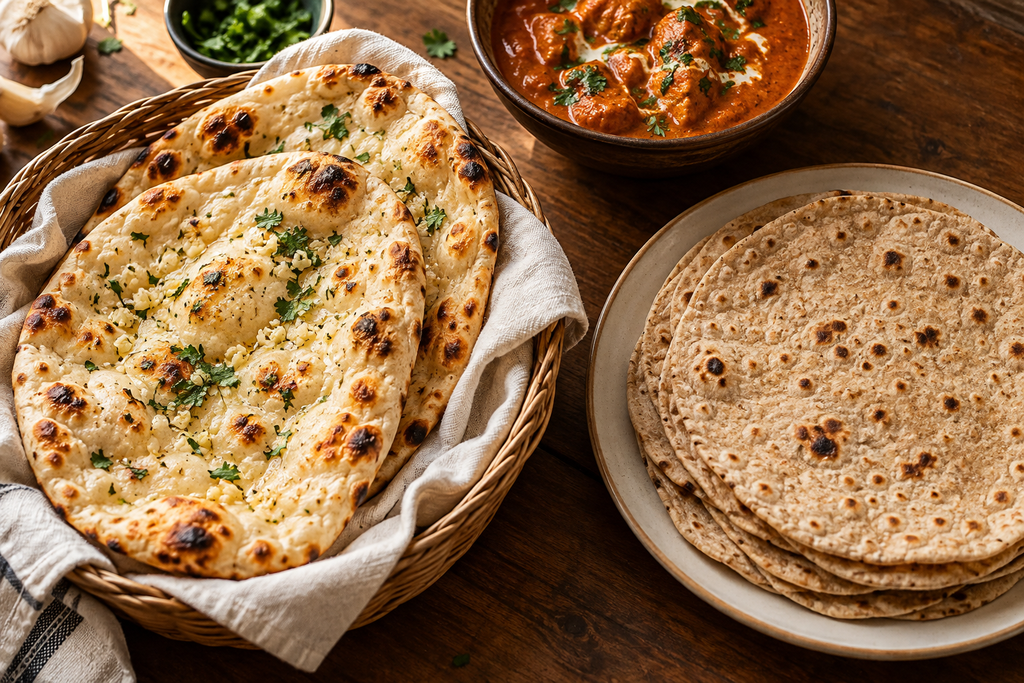
Choosing naan vs roti comes down to the texture and flavor you want alongside your meal. Both breads can scoop up curry or accompany vegetables, but they bring different qualities to the table. Naan is usually thicker and softer, while everyday whole-wheat roti is thinner with a more noticeable grain flavor.
What Makes These Breads Different?
The main differences begin with the dough and cooking method. Naan typically uses refined wheat flour and a leavening ingredient. Its dough may also contain yogurt, milk, or fat, depending on the recipe.
By comparison, everyday Indian roti commonly uses atta, a finely milled whole-wheat flour, and water without a leavening agent. Recipes and regional bread styles vary, so these distinctions describe familiar preparations rather than every possible version.
Naan’s Soft, Chewy Texture
Traditional naan cooks against the hot inner wall of a tandoor. The heat creates bubbles and browned patches while leaving the bread soft enough to tear. Home preparations, including this naan recipe, can use a hot pan to produce a similar effect.
Butter, garlic, or other toppings add another layer of flavor. If you prefer the curry to remain the main attraction, plain naan offers a simpler accompaniment.
Roti’s Thin, Flexible Texture
A common whole-wheat roti is rolled into a thin round and cooked on a hot griddle. It may puff during cooking but remains different from naan’s thicker, leavened structure. Restaurants may also offer tandoori roti, which uses a different cooking method. Check the menu description before assuming every roti will have the same texture.
Which Bread Works With Curry?
Both choices work with saucy dishes. Naan’s thicker texture makes it useful for scooping a creamy gravy, while roti folds easily around vegetables, lentils, or pieces of meat. When considering naan vs roti, there is no strict pairing rule. A familiar sauce can taste different with each bread, so sharing both is one way to compare them. Think about whether you want a soft, chewy bite or a thinner accompaniment.
What Should You Check Before Ordering?
Ask about ingredients if you avoid dairy or eggs. Naan recipes can include dairy, and either bread may be brushed with butter or ghee. Wheat-based versions are not gluten-free. Portion sizes matter, too. If you are ordering rice alongside bread, consider sharing rather than automatically choosing a full portion of each.
Explore Indian Breads at Namaste India
For diners in Mahwah, freshly baked naan can be part of exploring a varied Indian meal. Namaste India’s guide to North Indian dishes discusses curries, biryani, and tandoori preparations alongside naan.
Check the current bread selection and ask which options suit your chosen dishes. Trying different combinations can help you discover the textures and flavors you enjoy most.