
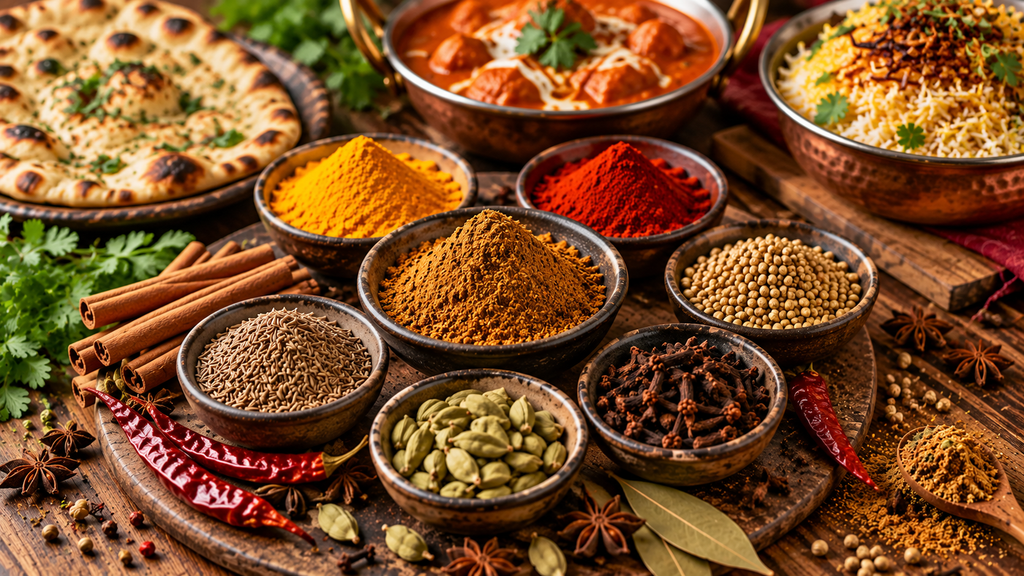
One of the most fascinating parts of Indian cuisine is the way different spices come together to create complex flavors. Rather than relying on a single seasoning, Indian cooking often combines several spices to build aroma, warmth, earthiness, sweetness, and sometimes heat. These combinations are commonly known as Indian spice blends.
For someone trying Indian food in Mahwah for the first time, understanding these blends can make it easier to appreciate why curries, biryanis, tandoori dishes, and other Indian favorites can taste so different from one another.
What Are Indian Spice Blends?
An Indian spice blend is a combination of spices selected to create a particular flavor profile. Depending on the dish and regional cooking tradition, spices may be used whole, ground, toasted, or combined at different stages of cooking.
Common spices found throughout Indian cuisine include cumin, coriander, turmeric, cardamom, cloves, cinnamon, and chili. However, there is no single combination that defines all Indian cooking. Different recipes use different proportions and techniques, which is why the same basic spices can contribute to very different dishes.
Garam Masala and Other Spice Combinations
One of the most recognizable Indian spice blends is garam masala. Rather than referring to one universal recipe, garam masala describes a blend of warming spices that can vary between regions, households, and cooking styles.
Other dishes may rely on their own combinations of spices instead of a prepared blend. The goal is not simply to make food spicy. Instead, spices are layered to complement the ingredients and create balance.
This is especially important for diners who assume that all Indian dishes are extremely hot. A dish can be highly aromatic and deeply seasoned without necessarily having intense chili heat.
How Spice Blends Change Different Indian Dishes
The influence of spices becomes easier to understand when comparing different types of Indian food. A biryani, for example, offers an aromatic rice-based experience, while curries can range considerably in richness, texture, and flavor. Tandoori cooking introduces another style altogether, using high-heat cooking to create a distinctive experience.
Spice Is About More Than Heat
Understanding Indian spice blends can completely change how you approach an Indian restaurant menu. Instead of simply asking whether something is “spicy,” consider the overall flavor you prefer mild and aromatic, rich and warming, or something with more noticeable heat.
If you’re exploring North Indian cuisine in Mahwah, Namaste India offers an opportunity to experience different styles of Indian food and discover how spices, cooking techniques, and ingredients work together.
Visit Namaste India in Mahwah and explore the different flavors that make Indian cuisine such a varied dining experience.