
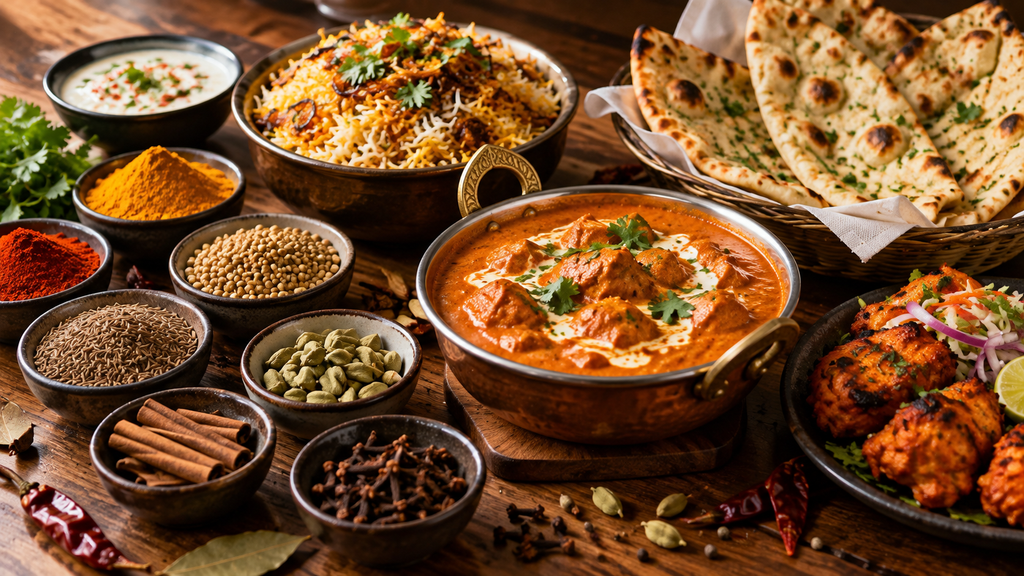
Indian cuisine is known for its rich aromas and distinctive flavors, but spice does not simply mean heat. Indian spices can create layers of warmth, earthiness, fragrance, sweetness, and depth. The way they are selected, combined, and used during cooking helps give different dishes their individual character.
For diners exploring North Indian cuisine, understanding how spices work can make it easier to appreciate the differences between curries, biryanis, tandoori dishes, and other traditional favorites.
Indian Spices Are About More Than Heat
Are all Indian dishes extremely spicy? No. Spices have many purposes beyond making food hot. Spices like cumin, coriander, and turmeric can contribute earthy, aromatic notes and distinctive color, while cardamom provides fragrance. Cardamom provides fragrance, while warming spices such as cloves and cinnamon can add additional complexity.
Chili contributes heat to many preparations, but it represents only one part of a much broader spice tradition. This variety helps explain why Indian dishes can have completely different flavor profiles even when they have similar levels of heat.
How Do Spices Create Layers of Flavor?
The way spices are handled during cooking can influence their aroma and overall character. They may be toasted, cooked with other ingredients, combined into spice blends, or introduced at different stages of preparation. These techniques help individual flavors work together rather than allowing one spice to dominate. This layering also helps create the differences between a creamy curry, an aromatic biryani, and a tandoori preparation.
Explore Indian Flavors Through Different Dishes
Trying different types of dishes is an easy way to experience the versatility of Indian spices. At Namaste India in Mahwah, diners can explore North Indian cuisine through curries, biryanis, naan, tandoori dishes, and appetizers. Vegetarian and vegan-friendly choices also provide options for different dining preferences.
For someone new to Indian cuisine, sharing several dishes can introduce a wider range of flavors and textures. Combining a curry, rice dish, appetizer, and Indian bread can provide a broader introduction to the cuisine.
Discover North Indian Cuisine in Mahwah
Understanding the role of spices can help diners recognize the aromas, textures, and layers that distinguish one Indian dish from another. Visit Namaste India at 44 Franklin Turnpike, Mahwah, NJ, to explore North Indian dishes and experience how different seasonings and cooking techniques create their distinctive flavors.