
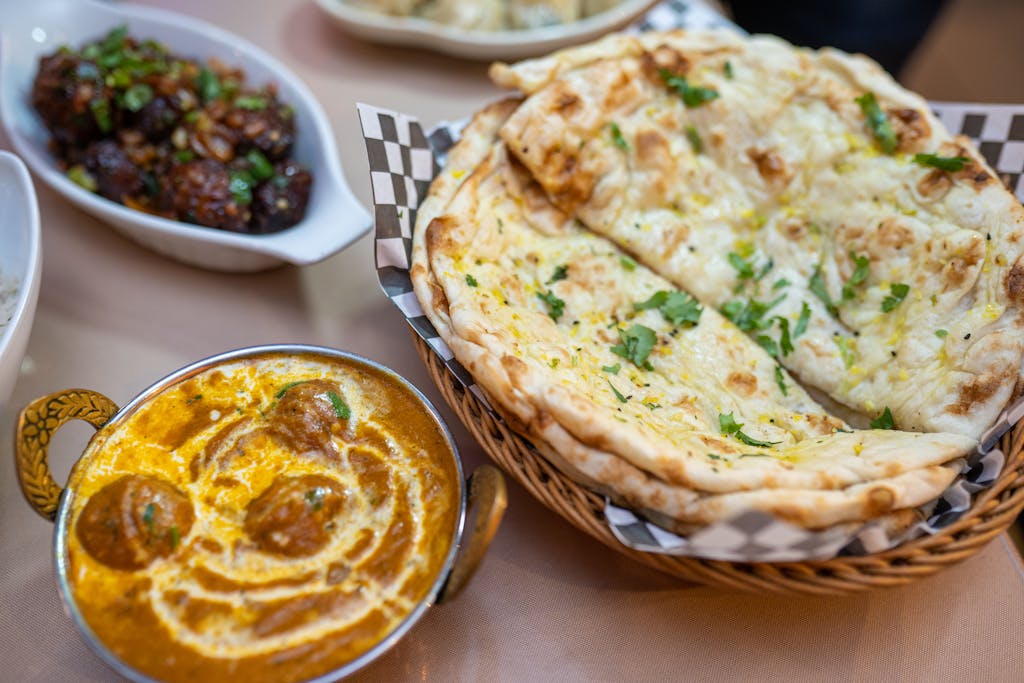
Garlic naan has become one of the most recognized Indian breads worldwide. Moreover, its soft, chewy texture and irresistible garlic aroma make it a favorite in restaurants and home kitchens alike. This classic flatbread stands out for its rich flavor and versatility. Additionally, it pairs beautifully with curries, kebabs, lentils, and grilled dishes. Therefore, understanding its origins, preparation methods, and serving options allows you to appreciate it thoroughly and make excellent versions at home.
The Origin and Cultural Significance of Garlic Naan
Naan traces its roots back several centuries. Traditionally, the bread was cooked in clay ovens called tandoors. Furthermore, historians link naan to the Mughal era when royal kitchens embraced soft leavened breads. Over time, regional variations appeared. Interestingly, garlic naan emerged as a flavorful twist on the classic.
Order Online
The addition of garlic, butter, and fresh herbs turned it into an aromatic delicacy. Today, it remains a staple across North Indian cuisine. Likewise, Indian restaurants worldwide serve garlic naan as a signature bread. Consequently, it carries both cultural depth and global appeal.
Understanding What Makes Garlic Naan Unique
Garlic naan stands out for its layered flavor. Fresh garlic adds sharpness. Butter offers richness. Meanwhile, herbs like cilantro bring freshness. The dough itself stays soft because it is enriched with yogurt or milk. As a result, the bread becomes pillowy yet slightly chewy.
Additionally, the high heat of a tandoor or skillet creates the signature charred spots. These smoky blisters enhance the overall taste. Therefore, every part of the process contributes to shaping the final experience.
Essential Ingredients for Traditional Garlic Naan
Authentic garlic naan uses simple ingredients. Flour forms the base of the dough. Yogurt provides tenderness. Salt brings balance. Garlic adds fragrance. Moreover, butter or ghee deepens flavor. Fresh herbs create brightness. Although the ingredient list is small, each element matters. High-quality garlic makes a noticeable difference. Freshly chopped cloves are far superior to pre-minced versions. Consequently, ingredient quality directly affects the aroma and taste of the finished naan.
How to Prepare Garlic Naan Dough
Preparing the dough requires care and patience. First, the leavening agent must activate correctly. Warm water helps yeast bloom. Meanwhile, combining flour, yogurt, and salt gives the dough structure. Next, knead everything until smooth. Kneading develops gluten, which creates elasticity.
Additionally, well-kneaded dough results in softer bread. After this step, the dough must rest. Resting allows it to rise and develop flavor. Therefore, never rush this process. In fact, a longer rise often produces a better texture. Once risen, the dough becomes airy and easy to shape.
Shaping Naan for Even Cooking
Shaping the dough impacts the final texture. Flattening each ball into an oval ensures even cooking. However, the thickness must be balanced. If the dough is too thick, the naan becomes heavy.
Furthermore, hand-shaping rather than rolling can produce a more rustic look. Many cooks stretch the dough gently to mimic the traditional technique. Consequently, the naan forms natural pockets and air bubbles when cooked.
Cooking Garlic Naan in a Tandoor
Traditional naan is cooked in a tandoor. The intense heat creates the signature char. Moreover, the bread sticks to the oven wall and bakes in seconds. Flames lick the dough, giving it a smoky aroma. Additionally, the high temperature ensures the inside stays soft.
Although not everyone has a tandoor at home, understanding the technique helps you replicate similar results in your kitchen. Interestingly, the tandoor method highlights how important heat levels are for authentic naan.
Making Garlic Naan at Home on a Skillet
Cooking garlic naan in a skillet is simple and effective. Preheating the pan is essential. Hot surfaces create instant puffing. Next, the dough is placed on the skillet. Bubbles form immediately. After bubbles appear, the naan is flipped. A second finish over open flame adds charring.
Moreover, brushing the hot naan with butter and garlic enhances its aroma. Similarly, adding chopped herbs at the end brings brightness. Therefore, this stove-top approach recreates the essence of tandoor cooking without special equipment.
Using an Oven for Garlic Naan
The oven provides another practical option. A baking stone or inverted tray helps recreate tandoor-like heat. Preheating for at least twenty minutes is crucial. Placing the dough on the hot surface ensures quick cooking. Meanwhile, broiling the naan briefly creates charred spots.
Additionally, oven baking allows multiple pieces to cook at once. Consequently, this method works well for families or gatherings. Although the oven lacks the smokiness of a tandoor, it produces clean, consistent results.
The Role of Garlic Butter in Enhancing Flavor
Garlic butter transforms naan from simple bread to a standout dish. Melted butter infused with fresh garlic brings richness and aroma. Brushing it on hot naan allows the flavors to absorb fully. Furthermore, adding herbs such as cilantro or parsley creates freshness. Some cooks blend roasted garlic for deeper sweetness.
In contrast, others prefer raw garlic for a sharper flavor. Either version works depending on preference. Ultimately, garlic butter ensures every bite feels indulgent and satisfying.
Popular Variations of Garlic Naan
Garlic naan offers room for creativity. Cheese garlic naan includes melted cheese inside or on top. This version has become extremely popular in restaurants. Additionally, chili garlic naan adds heat through fresh green chilies or chili flakes. Herb it focuses on fresh herbs for a lighter profile.
Whole-wheat garlic naan provides a wholesome alternative. Moreover, stuffed versions with spiced potatoes or paneer create hearty meals. Consequently, garlic naan adapts easily to different tastes and dietary preferences.
Serving Garlic Naan with Different Dishes
Garlic naan pairs beautifully with Indian dishes. It complements creamy gravies like butter chicken, paneer tikka masala, and dal makhani. Additionally, it enhances spicy curries by balancing the heat. Lentil dishes benefit from their soft texture. Kebabs taste richer when wrapped in warm naan.
Furthermore, it works well outside Indian cuisine. For instance, it can serve as a base for flatbread pizzas. In contrast, it can also accompany soups or salads for a comforting twist. Notably, its versatility makes it a favorite for both casual meals and festive dinners.
Storing and Reheating Garlic Naan
Proper storage maintains freshness. Cooling the naan completely prevents condensation. Storing in an airtight container preserves softness. Freezing is also possible for more extended storage. Moreover, reheating must be done carefully. Using a skillet restores warmth without drying the bread.
In addition, brushing fresh butter onto the surface during reheating revives flavor. Microwaving should be brief to avoid toughness. Consequently, thoughtful storage and reheating ensure the naan remains enjoyable even the next day.
Health Considerations and Ingredient Alternatives
Traditional it uses refined flour. However, substitutions are possible. Whole wheat flour provides more fiber. Gluten-free blends accommodate dietary needs. Additionally, replacing butter with olive oil supports lighter meals. Yogurt alternatives work for vegan versions.
Interestingly, these changes can alter texture. Therefore, experimenting helps find the balance that suits your preferences. Similarly, reducing garlic creates a milder flavor for sensitive palates. Ultimately, the dish remains adaptable without losing its comfort.
Tips for Making Restaurant-Style Garlic Naan at Home
Achieving restaurant-style results requires attention to detail. High heat is essential. Soft dough improves puffing. Proper resting enhances texture. Moreover, brushing garlic butter immediately after cooking ensures maximum flavor absorption. For instance, adding finely chopped garlic directly onto the dough before cooking intensifies the aroma.
Likewise, using fresh herbs makes the naan taste bright and vibrant. Following these principles consistently elevates your homemade naan to restaurant quality.
Why Garlic Naan Continues to Be a Global Favorite
Garlic naan stands out because it feels familiar yet exotic. It offers warmth, aroma, and comfort. Furthermore, it works with countless dishes. Its preparation is simple enough for beginners yet rewarding for experienced cooks. Additionally, its deep cultural roots make it meaningful. As a result, garlic naan remains a beloved food worldwide. Indeed, its popularity continues to grow as more people explore Indian cuisine.
Final Thoughts
Garlic naan embodies the heart of Indian cooking. It combines tradition, flavor, and simplicity. Moreover, it encourages creativity in the kitchen. With quality ingredients, proper technique, and attention to heat, anyone can prepare delicious garlic naan at home. Ultimately, mastering this bread opens the door to endless culinary possibilities. Consequently, it becomes a dish worth making again and again.